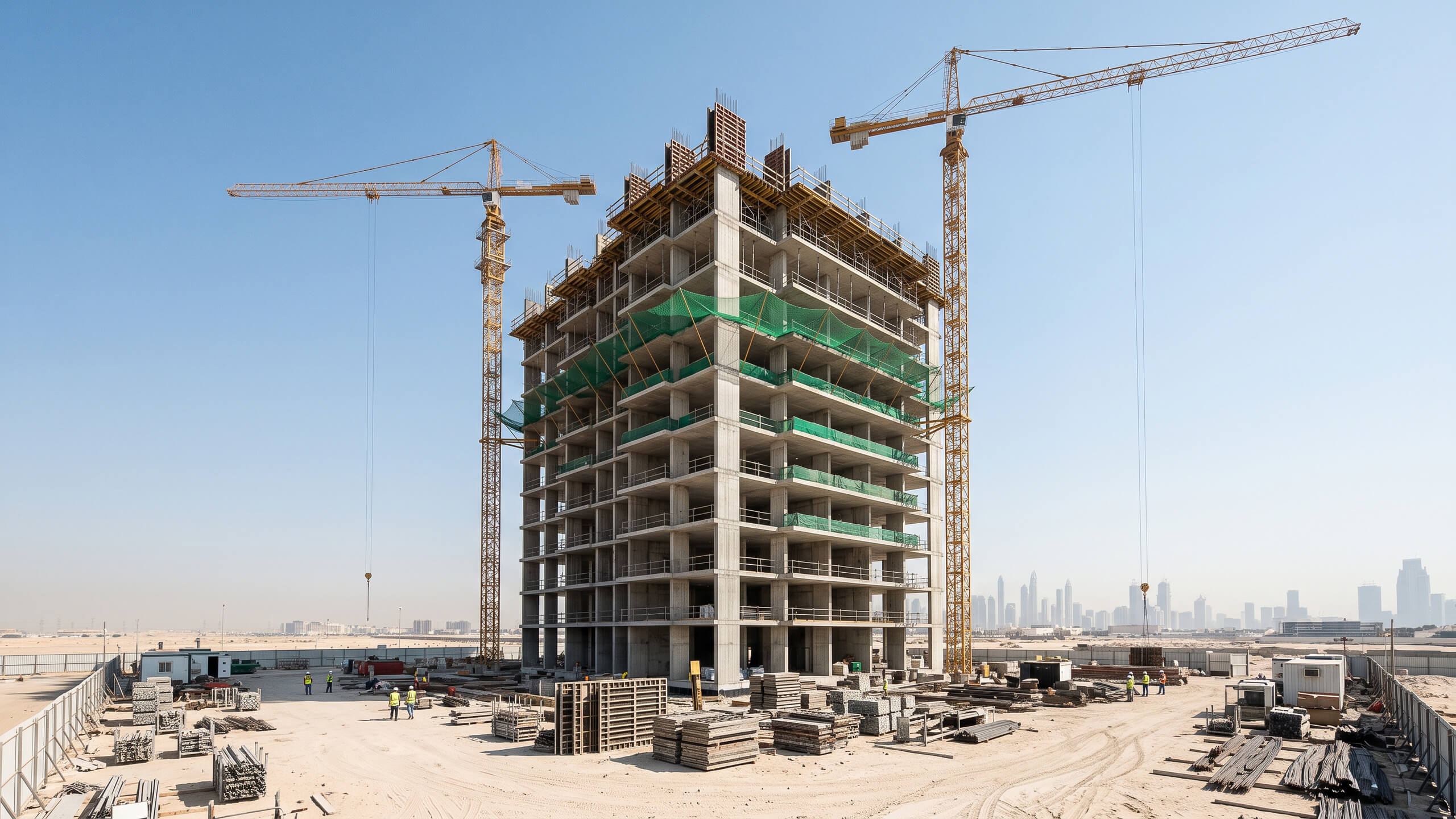
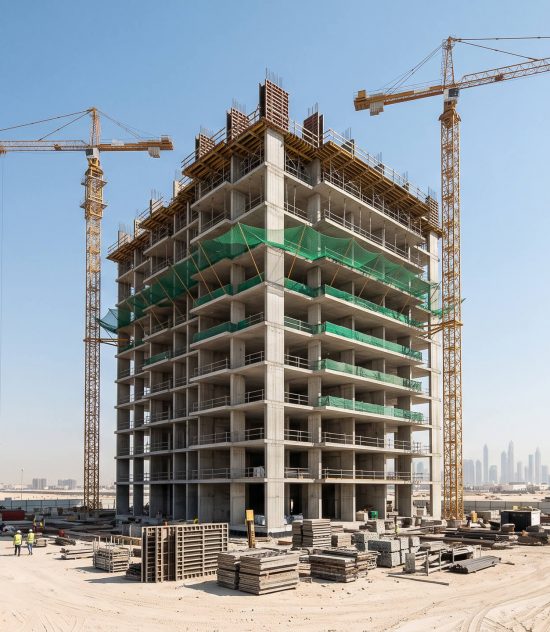
Contractors all risks insurance in the UAE protects a construction project against physical loss or damage to the works, and against claims from third parties injured or affected by the site. Known as CAR insurance, it usually runs from the start of work on site until handover, followed by a maintenance period. In Dubai, contractors must also submit a policy of this kind before the municipality issues many building permits.
Below, we explain the two sections of a CAR policy, who should be named, how the maintenance period works and where UAE policies commonly fall short. Cover terms and pricing are individually underwritten, and the regulations mentioned here change.
What Contractors All Risks Insurance in the UAE Covers
A CAR policy is a single project policy with two main sections. Section 1 covers physical loss of or damage to the works, and Section 2 covers legal liability to third parties for injury or property damage caused by the works.
Two forces usually drive the purchase:
Authority requirements: in Dubai, Executive Council Resolution No. (28) of 2022 requires contractors to submit a policy covering damage to the works and third-party liability to obtain a permit for building works of 300 square metres or more, demolition and shoring.
Main-contract requirements: employers, including government entities such as DEWA on their own projects, write insurance clauses into their conditions of contract. FIDIC-based contracts, widely used in the region, usually require the works to be insured in joint names.
ASIB places contractors all risks insurance for main contractors, subcontractors and developers, with limits matched to each project's contract value and conditions.
Section 1: Material Damage to the Works
Section 1 pays to repair or replace the works after sudden and unforeseen physical loss or damage from any cause not excluded. Typical causes include fire, flood, storm, theft, collapse and accidental damage during construction.
The sum insured should equal the full contract value, including materials supplied by the employer, so that a large loss is not reduced for underinsurance. Items that can be added include:
temporary works, such as formwork and scaffolding
construction plant, equipment and site huts
existing property on or next to the site
debris removal after a loss
professional fees for reinstatement design
overtime and express freight to speed up repairs
Each item carries its own limit, and the deductible for storm and flood damage can be higher than for other losses. If variations change the contract value, tell the insurer, because the premium is often adjusted on the final value.
Section 2: Third-Party Liability
Section 2 covers your legal liability for bodily injury to members of the public and damage to their property arising from the works. A crane load falling onto a neighbouring building, or debris damaging cars parked nearby, are typical examples.
It does not cover your own employees, who need workmen's compensation and employer's liability cover, or vehicles licensed for road use. Damage from vibration, or from removing or weakening support to neighbouring land, is often excluded unless an endorsement is added, which matters on deep basements and piling works.
The employer's own existing buildings are not third-party property, so they need the existing property extension under Section 1. The limit should meet the contract requirement and reflect what sits next to your site. Contractors with operations away from project sites, or between projects, usually also need annual public liability insurance.
Who Should Be Named on the Policy
Common UAE practice is to name the employer, the main contractor and all subcontractors as co-insured, each for their own rights and interests. Everyone can then claim under one policy, instead of pursuing each other after a loss.
Employer or developer: usually required by the contract, and often by the project's lenders.
Main contractor: normally arranges the policy and manages claims.
Subcontractors of all tiers: so a subcontractor's mistake does not leave a gap in cover.
Lenders: often named as loss payee on financed projects.
Consultants: sometimes added, usually only for their activities on site.
Two clauses make co-insurance work. A cross liability clause treats each insured as if separately insured for liability claims between them, and a waiver of subrogation stops the insurer recovering a paid claim from another named party.
The Maintenance and Defects Liability Period
After handover, most contracts give the contractor a defects liability period to return and fix defects. CAR cover for this period comes in two forms:
Maintenance cover
What it responds to
Visits maintenance
Damage the contractor causes while returning to site to carry out maintenance or repairs
Extended maintenance
Damage during the maintenance period that arises from a cause during construction, plus damage caused on maintenance visits
In Dubai, the policy required for building permits must stay valid until one year after the Certificate of Completion. UAE government and semi-government projects commonly require extended maintenance cover, sometimes for a longer defects liability period, so check the contract before you agree the policy period.
Maintenance cover is not the same as decennial liability, the ten-year liability for structural defects that the UAE Civil Transactions Law places on contractors and architects. That needs separate decennial liability insurance.
Common Gaps in UAE CAR Policies
Several gaps catch contractors out after a loss. Two deserve particular attention.
Design Defect Exclusions
Every CAR policy excludes some costs linked to defects in design, materials or workmanship. The London Engineering Group (LEG) clauses set out three common levels:
LEG1: an outright exclusion of loss or damage caused by a defect, and the narrowest cover.
LEG2: excludes the cost of rectifying the defect itself, but covers resulting damage to other parts of the works.
LEG3: also covers damage to the defective part, excluding only the cost of improving the original design or workmanship.
Check which clause applies before you sign, because the difference can decide whether a large claim is paid. Main contracts sometimes specify the level required.
Off-Site Storage and Transit
Standard CAR cover applies at the project site. Materials kept at a supplier's yard, a fabrication shop or a separate laydown area are often not covered unless an off-site storage extension is added, with its own limit.
Materials on their way to site need inland transit or marine cargo cover. For imported critical equipment, delay in start-up insurance can protect the employer's expected revenue if insured damage pushes back completion.
Contractors' plant and machinery, erection all risks and machinery cover can fill other gaps, and all sit within ASIB's engineering insurance lines.
What You Need to Get a Quote
Underwriters price contractors all risks insurance in the UAE on the detail of the project and the contract. Having this information ready speeds up a quotation:
contract value, broken down by works package
project description, location and site plan
construction and maintenance periods
insurance clauses from the main contract
soil report and method statements for excavation, piling or dewatering
details of neighbouring buildings and services
plant and equipment to be insured, with values
your experience on similar projects and claims history
the third-party limit and deductibles required
Disclose anything unusual, such as working next to occupied buildings or a live road. Ask for terms early in the tender, so the premium and any required deductibles can be priced into your bid. Two similar projects can receive different terms, because each is individually underwritten.
Frequently Asked Questions
Is contractors all risks insurance mandatory in the UAE?
In Dubai, contractors must submit a policy covering damage to the works and third-party liability to obtain a permit for many building works. Even where no authority rule applies, main contracts commonly require it.
Who pays for CAR insurance, the employer or the contractor?
It depends on the contract. Many UAE contracts require the main contractor to arrange and pay for the policy, with the cost built into the tender price, although some employers buy a project-wide policy themselves.
Does CAR insurance cover defective workmanship?
Not the cost of fixing the defect itself. Depending on the LEG clause, the policy may cover damage the defect causes to other parts of the works and, under LEG3, to the defective part too, excluding improvement costs.
How long does a CAR policy last?
It runs from the start of work on site until handover, followed by a maintenance period. In Dubai, the policy needed for building permits must remain valid until one year after the Certificate of Completion.
Does CAR insurance cover workers injured on site?
No. Injury to your own employees falls under workmen's compensation and employer's liability insurance, which should run alongside the CAR policy.
Talk to ASIB
Contractors all risks insurance in the UAE works best when the policy matches your contract, your site and your programme. To check the insurance clauses in a new contract or compare terms across insurers, get a CAR quotation from ASIB.
ASIB has worked with UAE businesses since 2003 and is registered with the Central Bank of the UAE (Registration No. 165), with DHA Health Insurance Intermediary Permit BRK-00012. Cover terms and pricing are individually underwritten, regulations change, and nothing in this article is legal advice.
The ASIB Insurance Team writes these guides to help individuals and businesses in the UAE understand their cover before they need it. ASIB has arranged personal and commercial insurance in the UAE since 2003, with a team of more than 100 insurance professionals.